
7 Famous Underground Places Around the World You Can Actually Visit
Meta Description: Discover seven underground places you can visit, from…
Meta Description: Discover seven underground places you can visit, from Cappadocia’s ancient cities to the Paris Catacombs. Learn what makes each site special and how to plan your visit.
Below the Surface: Seven Places Worth Exploring
Some destinations are easy to recognize from a postcard: a famous tower, a mountain range, or a beach at sunset. Underground attractions are different. You may not see much from the street, yet a staircase or a narrow passage can lead to a place with a remarkable story.
The sites in this guide are not all underground cities. Two are ancient settlements, one is an ossuary, another is a modern pedestrian network, and the others preserve traces of mining or earlier city life. That difference matters, because each place tells a different story about how people used the space beneath their feet.
If you are planning a visit, check the official visitor information before setting out. Opening hours, access arrangements, and tour options can change.
1. Derinkuyu Underground City, Türkiye
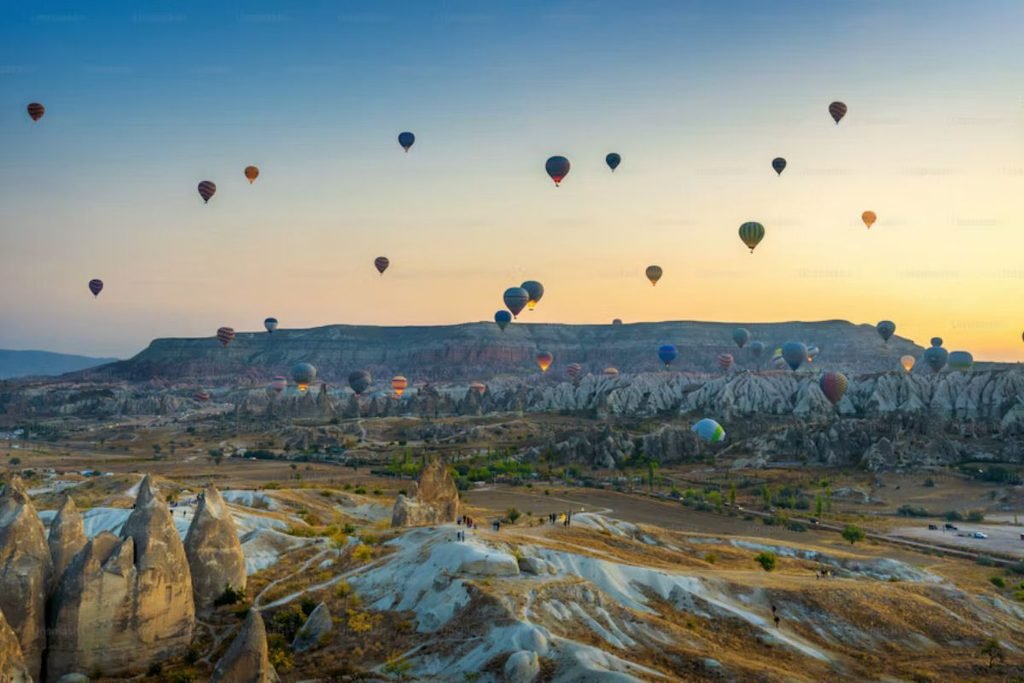
In Cappadocia, the landscape is renowned for its unusual rock formations. Below it lies a very different sight: Derinkuyu, an underground settlement that reaches roughly 85 meters below ground. Eight levels are generally described as open to visitors, though access can vary.
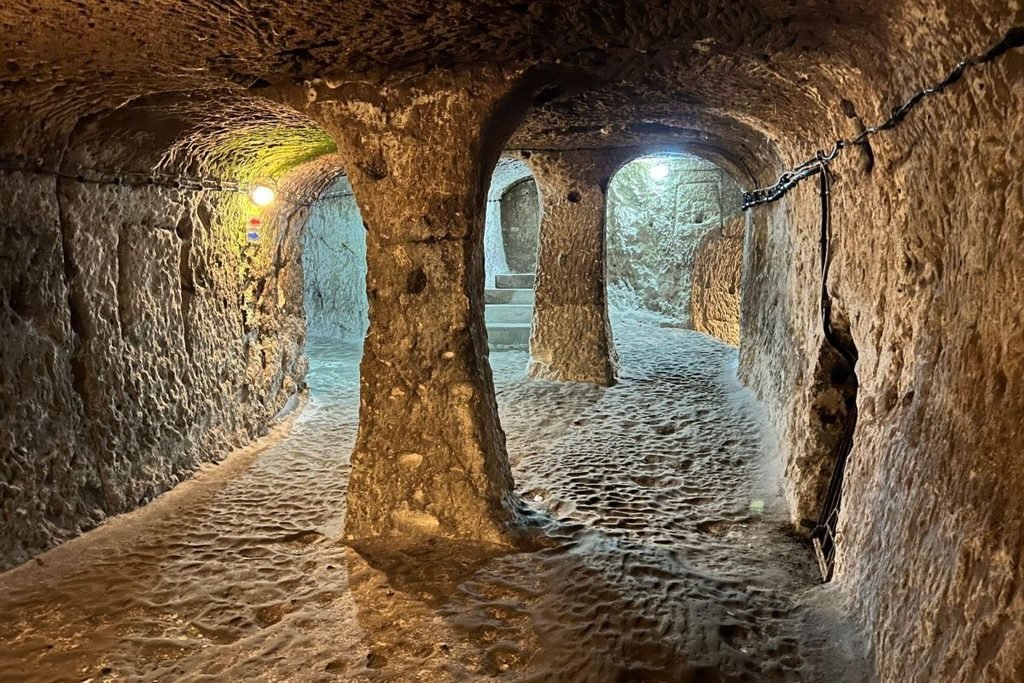
The rooms and passages were not made for sightseeing. They formed part of a place where people could take shelter during periods of danger. Storage areas, living spaces, stables, religious rooms, and ventilation shafts provide an idea of how daily life could continue underground.
The ventilation system is especially intriguing. Air had to circulate through connected spaces, while heavy stone doors could be used to block passages. These features help explain why Derinkuyu is more than a maze of tunnels: it was a planned environment built around practical needs.
Allow roughly 45–75 minutes for the visit, depending on your pace and crowd levels. The route can include steep stairs, narrow passages, and low ceilings, so shoes with good grip are a sensible choice. If you are uncomfortable in tight spaces or have mobility concerns, check the current visitor guidance first.
Check Derinkuyu tickets and tours before you go.
2. Kaymaklı Underground City, Türkiye
Kaymaklı is another underground settlement in Cappadocia, but it offers a different feel from Derinkuyu. Its connected rooms and low, narrow passages lead through several underground levels, showing how spaces could be arranged for different tasks.
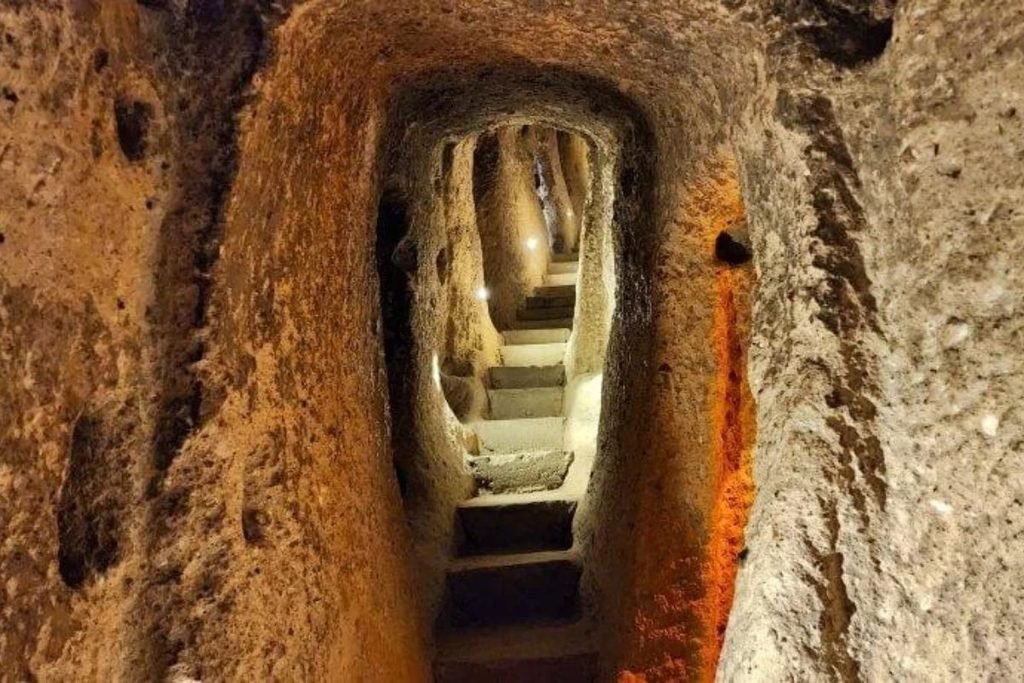
Visitors can see areas associated with food storage, living, cooking, and keeping animals. Rather than imagining one enormous hidden hall, picture a network of smaller spaces linked together. The layout becomes easier to understand when a guide explains what each area was used for.
Kaymaklı and Derinkuyu are often mentioned together, but there is no need to rush through both in one visit. If you have enough time, visiting both lets you compare two settlements from the same region. If your schedule is tight, choose the one that best fits your interests and travel route.
Plan for at least an hour, and be prepared for cramped sections and uneven footing. You can look into a Kaymaklı half-day tour if you prefer to visit with a guide. Check the tour details carefully to see what is included and where it starts.
3. The Paris Catacombs, France
The Paris Catacombs are often grouped into lists of underground cities, but they served a very different purpose. They are an underground ossuary: a place where human remains were transferred and stored.
In the late eighteenth century, overcrowded cemeteries raised public health concerns in Paris. Authorities moved remains into disused limestone quarries outside the city at that time. Over the years, the bones were arranged in the galleries that visitors can see today.
The public route covers about 1.5 kilometers. It is a striking and solemn place, not a haunted-house attraction. The carefully arranged bones offer a reminder of the city’s past and of how it responded to a serious urban problem.
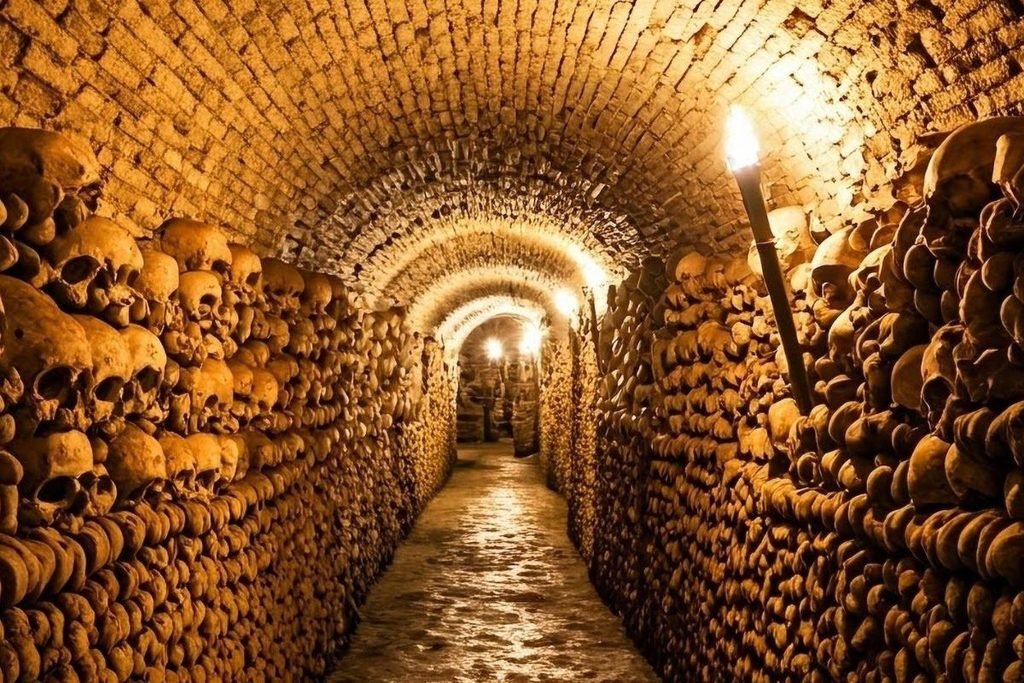
Timed tickets are recommended, and the route includes stairs and underground passages. Before booking, consult the official Catacombs site for current opening information, visitor rules, and accessibility details.
4. Montreal’s Underground City (RESO), Canada
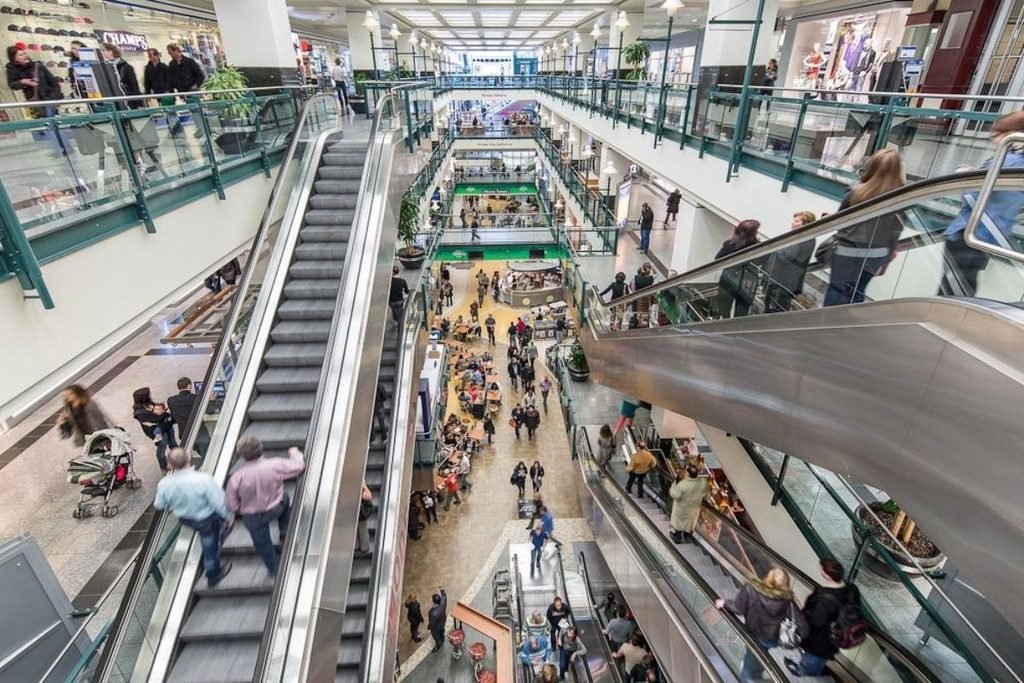
Montreal’s RESO shows that underground spaces are not only a feature of the distant past. It is a modern pedestrian network linking parts of downtown through indoor and underground passages. Along the way, people can reach metro stations, shopping centers, offices, hotels, and restaurants.
The network is commonly described as extending for about 32 kilometers, although the exact route you experience depends on which connected sections you use. It is not one continuous tunnel that every visitor needs to walk from end to end.
RESO is particularly useful in winter, when Montreal can be very cold and snowy. For visitors, it can also be an interesting way to see how a city connects its buildings and public transport. You might use it to get from one downtown stop to another, rather than treating it as a single attraction with a set start and finish.
Plan your route around the places you actually want to visit, and remember that individual buildings and sections may have different opening hours. The city’s official website, Montreal.ca, is a good starting point for local information.
5. Seattle Underground, USA
Seattle’s underground story began with a major change to the city itself. After the Great Seattle Fire of 1889, parts of downtown were rebuilt, and streets and sidewalks were raised in some areas. Remnants of the earlier street level remain beneath today’s Pioneer Square neighborhood.
On a guided tour, visitors can see parts of that older urban landscape and hear how Seattle changed as it rebuilt. The experience is less about ancient secrets and more about the practical decisions that reshaped a growing city.
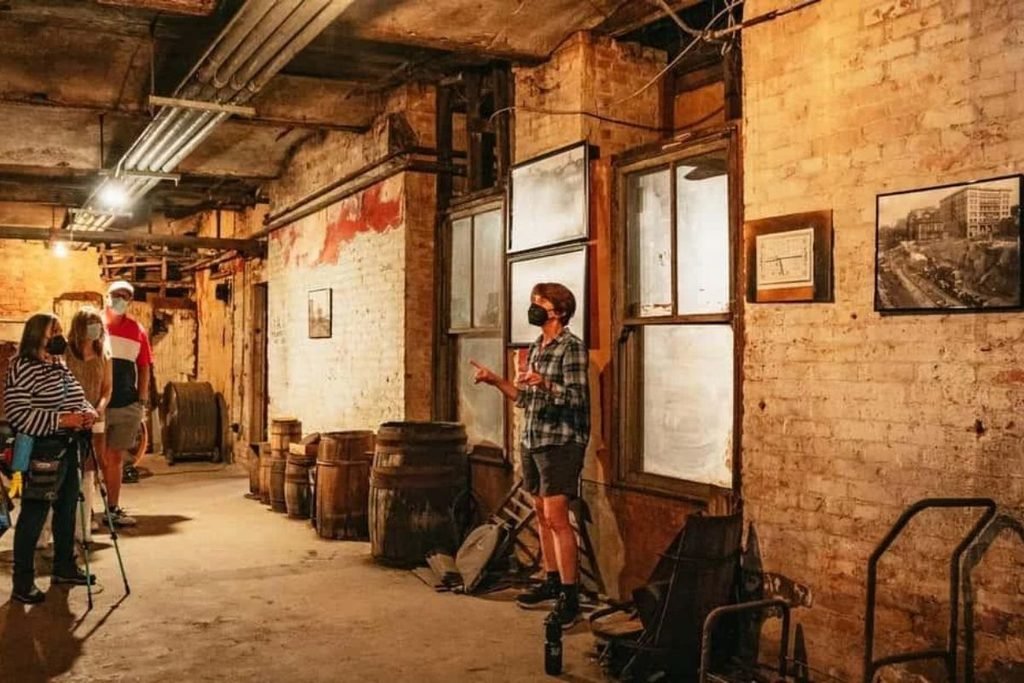
A guide helps connect the physical remains with the story behind them. Look for a tour that explains the rebuilding and the neighborhood, rather than assuming every underground space has the same history.
You can find visitor details and ticket information through the Seattle Underground Tour website. Check the tour schedule and meeting point before you go.
6. Edinburgh’s Vaults, Scotland
Beneath Edinburgh’s South Bridge are historic chambers known as the Edinburgh Vaults. The spaces were used for purposes such as storage and workshops, and some became associated with overcrowding and damp conditions. Their history is tied to the people who worked and lived around the city’s busy streets.
Today, tours often combine the history of the vaults with local stories and legends. It is worth keeping those categories separate: some details are grounded in historical records, while stories about mysterious events may be folklore rather than proven fact.
The vaults can appeal to travelers who enjoy learning about the less visible parts of a historic city. A guided visit provides context and helps explain how the chambers fitted into Edinburgh’s development.
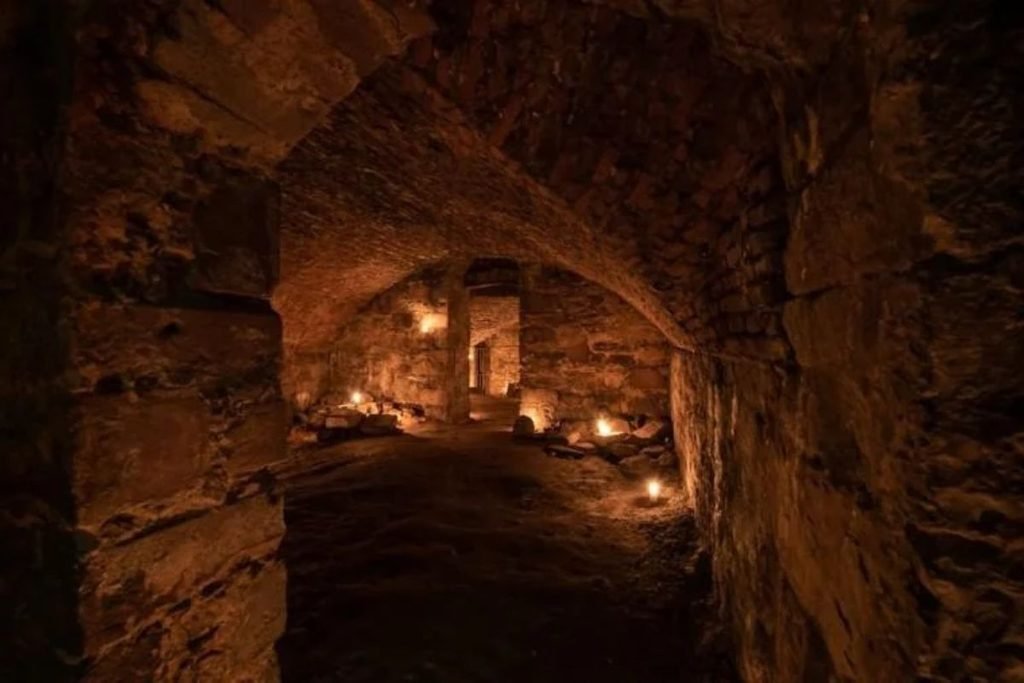
Check available routes and visitor information with an Edinburgh vault tour provider. Underground chambers can feel cool and damp, so a light jacket is useful.
7. Wieliczka Salt Mine, Poland
Near Kraków, the Wieliczka Salt Mine preserves centuries of mining history beneath the ground. It is not an underground city, but its chambers, sculptures, and chapels make it one of the most distinctive underground heritage sites in Europe.
The best-known feature is St. Kinga’s Chapel. Its decorations, sculptures, and architectural details were carved from rock salt, turning a working material into an extraordinary interior. Seeing it in person also gives a sense of the scale of the chambers and the labor involved in creating them.
A guided route helps explain how the mine developed and how miners worked below ground. Routes, access rules, and the physical demands of a visit can vary, so check the official information before booking.
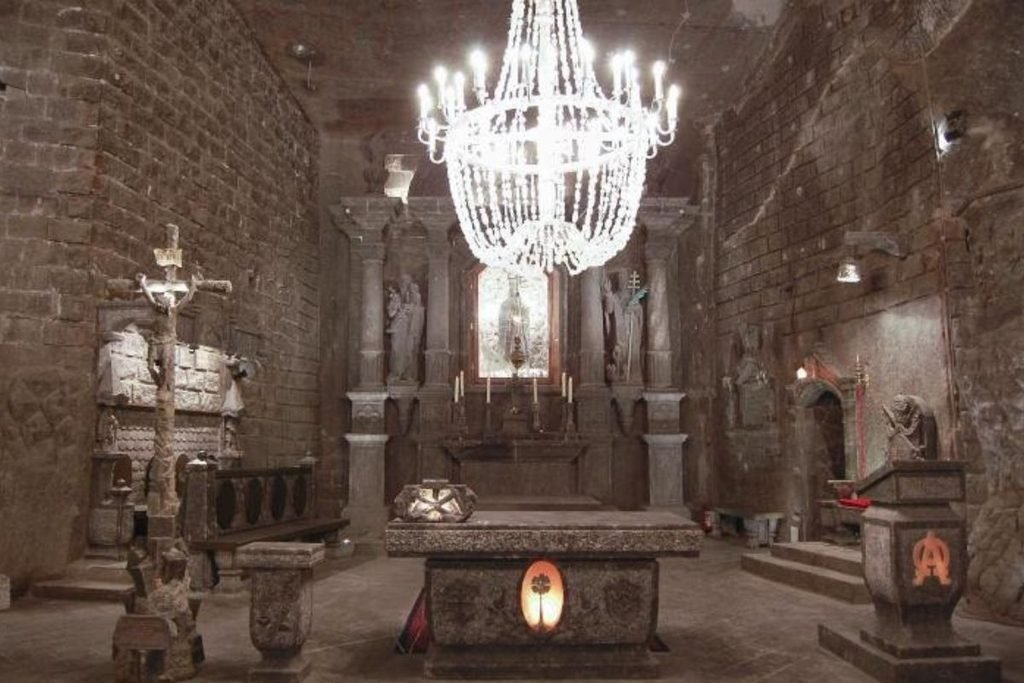
For tour details and visitor arrangements, use the official Wieliczka Salt Mine website.
At a Glance: Which Place Suits Your Trip?
PlaceBest for Type of Site Visit styleDerinkuyu, Türkiye. Ancient engineering and history Underground settlement visitor route Kaymaklı, Türkiye Seeing how underground rooms connect Underground settlement: visitor route or guided tour of the Paris Catacombs, France Urban history and a solemn atmosphere Underground Observatory timed the public route. Montreal RESO, Canada Getting around downtown, especially in winter Modern pedestrian network Explore connected sections in Seattle. Underground, USA The history of a changing city Historic street-level remains Guided tour of Edinburgh Vaults, Scotland Historic chambers and local stories Underground vaults guided tour Wieliczka, Poland Mining heritage and salt-carved art Historic salt mine Guided route
One place often mentioned in discussions of underground cities is Beijing’s Dixia Cheng, a Cold War-era tunnel network. Public access has been limited and can change, so do not assume it is open to ordinary visitors without checking current local information.
What to Bring
You do not need specialist equipment for most official tours, but a little preparation can make the visit easier.
- Shoes with good grip: Stairs, stone floors, and uneven surfaces can be slippery.
- A light jacket: Underground spaces may feel cooler or damper than the street above.
- A small bag: Large bags may be restricted, and a compact one is easier to carry.
- A charged phone: Useful for tickets and travel details, but follow each site’s photography rules.
- Your booking details: Some attractions use timed entry or require you to meet a guide at a specific place.
Always read the current visitor rules. Do not assume that a torch, photography, or access to every passage is permitted.
Safety and Access
The places in this guide have visitor arrangements, but that does not mean every tunnel or underground space nearby is safe or open to the public. Closed passages, abandoned quarries, and restricted sections can have unstable surfaces, poor ventilation, or other hazards.
Stick to the authorized route, follow staff instructions, and check accessibility information if stairs, low ceilings, or confined spaces may be a concern. For some visitors, that preparation is just as important as choosing which site to see.
Frequently Asked Questions
Which underground places are worth visiting?
Derinkuyu and Kaymaklı are good choices for ancient underground settlements. The Paris Catacombs focus on burial history, Montreal’s RESO is a modern pedestrian network, Seattle Underground preserves traces of an earlier street level, Edinburgh’s Vaults are historic chambers, and Wieliczka is a salt mine known for its underground art and heritage.
Why did people build underground settlements?
The reasons differed by place and period. Some underground settlements offered shelter during times of danger, while their rooms could also be used for storing food, keeping animals, and carrying out everyday tasks.
Is Derinkuyu open to visitors?
Parts of Derinkuyu are open to the public, but access arrangements can change. Check current local visitor information before travelling. The site is often described as reaching about 85 meters below ground, while only a portion of its levels is accessible on the visitor route.
Are underground attractions suitable for everyone?
Not always. Some routes include steep stairs, narrow corridors, uneven floors, or low ceilings. Review accessibility guidance and tour requirements before buying a ticket, especially if you have mobility concerns or dislike enclosed spaces.
Should I book a guide?
It depends on the attraction. Guided tours are part of the experience at some sites and can add useful context at others. For independent visits, confirm whether tickets must be booked in advance and whether the route is clearly marked.
How long should I allow for a visit?
It varies by site, route, and crowd levels. Derinkuyu is often estimated at around 45–75 minutes, Kaymaklı at about an hour or more, and the Paris Catacombs public route at roughly an hour. Montreal’s RESO is different: you can explore selected sections as part of a wider downtown visit. Verify timings with each attraction before finalizing your plans.
A Different View of the World
These seven places are connected by one simple idea: the ground beneath a city or landscape can hold stories that are easy to miss from above. In Cappadocia, underground rooms show how communities adapted to danger. In Paris and Seattle, the spaces tell stories about changing cities. In Montreal, underground links help people move through a modern downtown. In Edinburgh and Wieliczka, historic chambers reveal work, daily life, and craftsmanship.
Choose the site that fits your interests, check the latest visitor information, and leave room to learn something unexpected along the way.